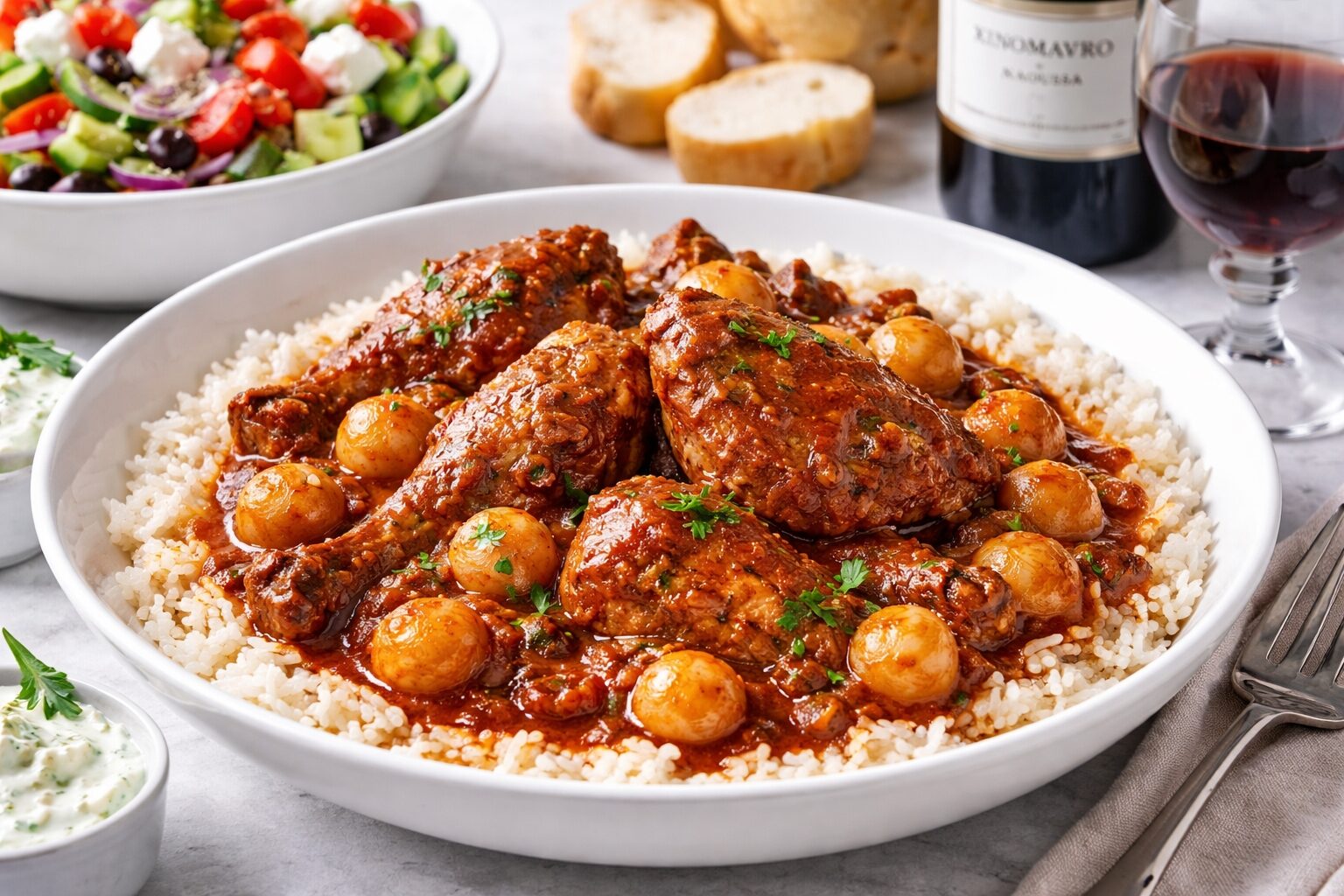
Greek cuisine tells stories through slow cooking, seasonal ingredients, and recipes passed from one generation to the next. One dish that perfectly captures this tradition is Greek rooster stifado (Κόκορας Στιφάδο) — a rich, aromatic stew slowly cooked with pearl onions, red wine, tomatoes, cinnamon, and cloves.
In many Greek homes, stifado is more than just dinner. It is a dish connected to Sunday family tables, village kitchens, and winter gatherings around a warm pot of simmering stew.
My version keeps the authentic Greek flavors intact, but I cook it in a pressure cooker to achieve the same deep flavor in less time. However, the result still tastes like the traditional rooster stifado you would find in a Greek taverna.
In this guide you will discover:
- The history and origin of Greek stifado
- Why rooster is the traditional meat
- Cooking tips for perfect stifado
- Interesting facts about this famous Greek stew
- And of course, my Greek rooster stifado recipe
The History and Origin of Greek Stifado
Greek stifado has a long and fascinating history. In fact, the word stifado likely comes from the Italian word “stufato,” meaning stew. The dish entered Greek cuisine during the Venetian rule of the Ionian Islands between the 13th and 18th centuries.
However, Greeks quickly made the recipe their own.
Over time, cooks across the country added local ingredients and spices, such as:
- Cinnamon
- Cloves
- Bay leaves
- Red wine
- Tomato
These ingredients transformed stifado into the deeply aromatic stew we know today.
Originally, early versions of stifado did not contain tomatoes, because tomatoes arrived in Greece much later, around the 18th century. Eventually, however, tomatoes became a staple ingredient in the sauce.
Today, stifado is one of the most iconic Greek comfort foods.
Why Rooster Is the Traditional Meat for Stifado
While many modern recipes use beef or rabbit, traditional Greek stifado was often made with rooster.
There are several reasons for this.
First, village households commonly raised roosters and chickens, making them an accessible protein source.
Second, rooster meat is firmer and more flavorful than chicken, which makes it perfect for long slow cooking.
As the rooster simmers in wine, tomatoes, and spices, the meat becomes tender, rich, and deeply flavorful.
For this reason, many Greek grandmothers still insist that “real stifado must be made with rooster.”
That said, chicken works beautifully too — especially when cooked with the same traditional spices.
What Makes Greek Stifado Unique
At first glance, stifado might look like a typical stew. However, a few ingredients make it distinctively Greek.
Pearl Onions
Unlike many stews, stifado contains large amounts of small pearl onions. These onions slowly soften in the sauce and add natural sweetness that balances the acidity of the tomatoes and wine.
Warm Mediterranean Spices
Greek cooks flavor stifado with:
- Cinnamon
- Cloves
- Bay leaves
These spices create the signature aroma that fills the kitchen while the stew cooks.
Red Wine
Wine is essential for depth of flavor. Traditionally, Greeks use local wines such as:
- Xinomavro
- Agiorgitiko
The wine enriches the sauce and helps tenderize the meat.
My Experience Cooking Traditional Rooster Stifado
I have cooked stifado many times in my kitchen, and each time the aroma of cinnamon, wine, and slowly simmering onions reminds me why this dish remains such a beloved part of Greek home cooking.
One thing I learned early is that browning the chicken properly creates the foundation of the stew’s flavor. When the meat develops a deep golden crust, the entire sauce becomes richer and more complex.
Another simple technique I always follow is allowing the stew to rest for about 20 minutes before serving. This allows the sauce to thicken naturally while the spices settle beautifully into the meat and onions.
These small details reflect the traditional methods used in Greek kitchens for generations.
My Pressure Cooker Rooster Stifado Method
Traditionally, rooster stifado cooks slowly in a clay pot or heavy casserole for several hours.
However, modern kitchens allow us to achieve the same depth of flavor using a pressure cooker.
The secret is simple:
- Marinate the chicken in red wine
- Brown the meat properly
- Build layers of flavor
- Simmer the pearl onions until tender
This method preserves the authentic taste of Greek stifado while saving time.
Greek Rooster Stifado Ingredients
The ingredients for this dish are simple but powerful. Each one contributes to the stew’s characteristic depth.
Key ingredients include:
- Rooster or chicken pieces
- Dry red wine
- Pearl onions
- Tomato paste and chopped tomatoes
- Cinnamon stick
- Whole cloves
- Bay leaf
- Garlic
- Olive oil
Together, these ingredients create a rich and aromatic sauce that coats the meat perfectly.
Greek Rooster Stifado Recipe
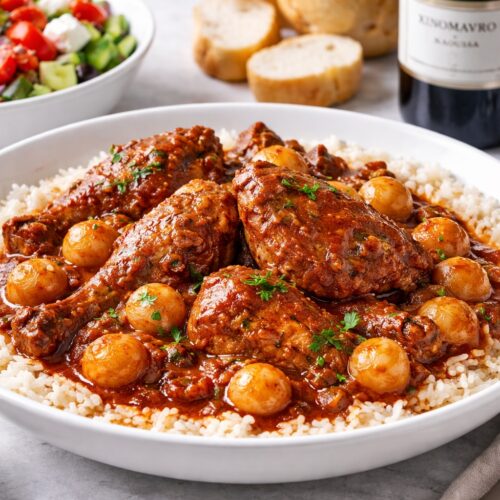
Greek Rooster Stifado (Pressure Cooker, Marinated in Red Wine)

Ingredients
For the Marinade
- 1 cup dry red wine
- 2 tablespoons olive oil
- 2 garlic cloves crushed
- 1 bay leaf
- 5 whole peppercorns
- small piece cinnamon stick
For the Stifado
- 1 kg chicken or rooster pieces skin-on
- 600 g pearl onions peeled
- 3 tablespoons olive oil
- 1 garlic clove sliced
- 2 tablespoons tomato paste
- 400 g canned chopped tomatoes
- 1 cinnamon stick
- 4 –6 whole cloves
- 1 bay leaf
- salt and freshly ground black pepper
- 1 teaspoon sugar optional
- 1 tablespoon red wine vinegar optional finish
Instructions
Step 1 – Marinate the Chicken
- Pat the chicken pieces dry.
- Combine wine, olive oil, garlic, bay leaf, peppercorns, and cinnamon.
- Add the chicken and refrigerate for 12–24 hours.
- Before cooking, strain the marinade and reserve the wine.
- Pat the chicken completely dry.
Step 2 – Brown the Chicken
- Heat olive oil in the pressure cooker using sauté mode.
- Place chicken skin-side down.
- Brown for about 4–5 minutes per side.
- Remove and set aside.
- Browning the meat creates the deep flavor base of the stew.
Step 3 – Build the Sauce
- Add sliced garlic to the pot and cook briefly.
- Stir in tomato paste and cook for 1–2 minutes.
- Add cinnamon, cloves, and bay leaf.
Step 4 – Deglaze the Pot
- Pour the reserved marinade wine into the pot. Scrape the bottom to release caramelized bits and simmer for 2–3 minutes.
Step 5 – Pressure Cook the Rooster
- Add chopped tomatoes.
- Return the chicken to the pot.
- Season with salt and pepper.
- Seal the pressure cooker.
- Cook on high pressure for 15 minutes (or 20 minutes for tougher rooster).
- Allow natural pressure release for 10–15 minutes.
Step 6 – Add Pearl Onions and Simmer
- Open the pressure cooker.
- Add the pearl onions.
- Simmer uncovered for about 15 minutes, until the onions are tender and the sauce thickens.
Notes
Recipe
- Browning the pearl onions is essential for authentic Greek stifado flavor.
- Always pat chicken dry before browning.
- Stifado tastes even better the next day.
- Serve with rice, pasta or crusty bread.
- Pair with a Greek red wine such as Xinomavro or Agiorgitiko.
Nutrition (Approximate per serving – 4 servings)
- Calories: 600–640 kcal
- Protein: 45 g
- Fat: 40 g
- Carbohydrates: 20 g
- Fiber: 4 g
Tips for the Best Greek Stifado
Even though stifado is a rustic dish, a few simple tips can make a big difference.
Always Brown the Meat
Browning creates caramelized flavor that forms the foundation of the sauce.
Dry the Chicken Before Cooking
Pat the chicken dry before browning so it develops a proper crust instead of steaming.
Use Whole Spices
Whole cinnamon sticks and cloves produce cleaner and deeper flavor than ground spices.
Let the Stew Rest
Interestingly, stifado tastes even better the next day because the flavors continue to develop.
Balance the Sauce
A small splash of red wine vinegar at the end brightens the dish and balances the sweetness of the onions.
Traditional Ways Greeks Serve Stifado
In Greece, rooster stifado is usually served with simple sides that absorb the rich sauce.
Popular options include:
- White rice
- Thick pasta such as hilopites
- Crusty village bread
- Mashed potatoes
Of course, many Greeks also enjoy it with a glass of red wine.
Wine Pairing for Rooster Stifado
Because the dish already contains red wine, pairing it with the right wine enhances the meal beautifully.
Excellent Greek choices include:
- Xinomavro – bold and structured
- Agiorgitiko – smooth and fruity
Both wines complement the tomato, spices, and slow-cooked meat.
Interesting Facts About Greek Stifado
- Stifado is one of the most popular winter stews in Greece.
- The dish appears in regional variations across the country.
- Some islands prepare octopus stifado instead of meat.
- Rabbit stifado is especially popular in Crete and the Peloponnese.
- Traditional recipes often include up to one kilo of pearl onions.
Frequently Asked Questions About Stifado
Can I make stifado with chicken instead of rooster?
Yes. Chicken works very well and cooks faster while still absorbing the traditional flavors.
Can I cook stifado without a pressure cooker?
Absolutely. Simply simmer the stew in a heavy pot for 1.5–2 hours until the meat becomes tender.
Why are pearl onions used in stifado?
Pearl onions add natural sweetness and texture, balancing the acidity of tomatoes and wine.
Does stifado freeze well?
Yes. In fact, stifado freezes extremely well and often tastes even better after reheating.
Final Thoughts
Greek rooster stifado is a dish that beautifully represents the heart of Greek home cooking. It combines humble ingredients, warm spices, and slow cooking techniques that have been passed down through generations.
Whether you cook it for a Sunday family meal or a cozy winter dinner, this stew always delivers deep flavor and comfort.
Most importantly, stifado reminds us that Greek food celebrates good ingredients, patience, and tradition.
Once you try it, you may understand why this dish has remained a beloved classic in Greek kitchens for centuries.