Midnight Comfort, From Tavern to Home
In Thessaloniki, the scent of magiritsa begins to drift through the old neighborhoods late on Holy Saturday — from the small family taverns hidden in stone alleys to the quiet apartment kitchens where mothers stir golden pots under soft lighting. If you want to experience this, try a Traditional Greek Magiritsa Recipe yourself.
My own earliest memories of magiritsa come from my mother, who learned it from her mother before her. And every Holy Week, without fail, she would prepare it with the same devotion: slow, precise, and full of care.
It wasn’t just a soup. It was our first meal of the Resurrection, shared with candle wax still on our hands, sleepy smiles around the table, and the gentle silence that only follows midnight prayers.
Magiritsa – The Soup That Marks the End and the Beginning
Magiritsa is the dish that closes the fast and opens Easter, a bridge between spiritual reflection and celebration. In Northern Greece, especially here in Thessaloniki, tavernas often serve their own versions after midnight — each with its own touch of dill, a dash more lemon, a swirl of olive oil. If you want to capture this spirit, make a Traditional Greek Magiritsa Recipe at home.
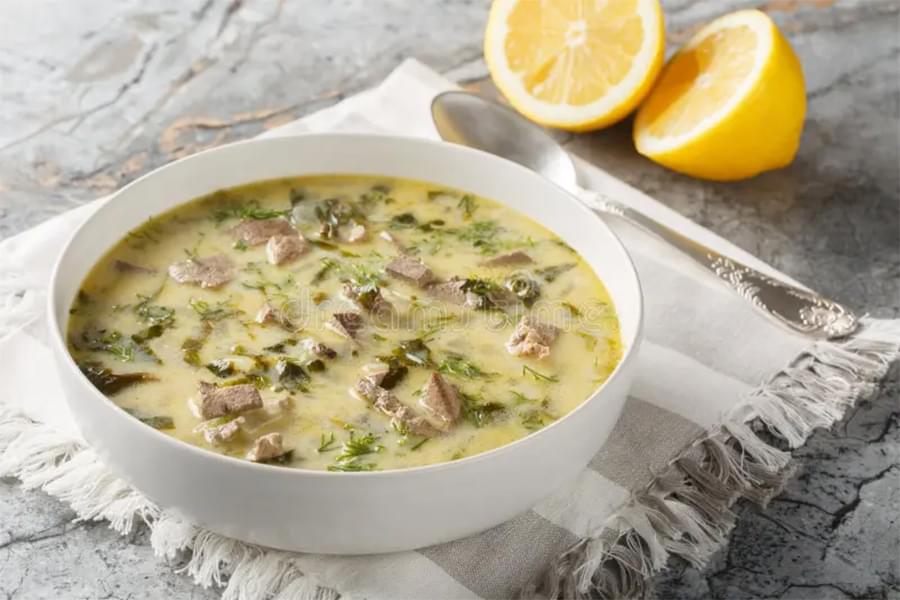
But at home, my mother’s version stood apart: elegant in its simplicity, rich in aroma, softened by avgolemono, and brightened with fresh herbs and tender lettuce. The result was comforting, deeply traditional, yet always refined — as though passed down with a whisper of love in every spoonful.
From the Taverns of the North to Your Table
Thessaloniki’s taverns are known for their mastery of offal — from kokoretsi to soups like patsa and magiritsa. Yet unlike the more rustic village versions, urban taverns crafted magiritsa with a light, lemony broth, fresh greens, and soft egg ribbons from avgolemono. If you want to recreate this, following a Traditional Greek Magiritsa Recipe will help.
That’s the version I bring to you today. The one I watched my mother make year after year — her apron dusted with salt, her hands swift and sure, her voice gently reminding: “Always stir the egg-lemon slowly, and never while it’s boiling.”
Did You Know?
-
Magiritsa is rarely served outside Easter — it’s a once-a-year treasure. So, be sure to try a Traditional Greek Magiritsa Recipe to truly savor this special dish.
-
Its purpose is both symbolic and practical: to nourish the body after fasting, using the parts of the lamb that wouldn’t go on the spit the next day.
-
Many households in Thessaloniki simmer the intestines with a splash of dry white wine, a Northern touch not common in other regions.
From My Mother’s Hands – Tips for Perfect Magiritsa
-
Clean the intestines like she did: Rinse first with lemon and coarse salt, then soak them in vinegar water. Always rinse three times. This ensures a clean, delicate flavor.
-
Sauté the onions and dill before the meat — this brings out their sweetness and builds a flavorful base.
-
Add lettuce last, just before simmering. It should wilt, not boil.
-
To keep the avgolemono silky, remove the pot from the heat, temper the egg mixture with a few ladles of hot broth, then slowly swirl it in.
Serving Like a Thessaloniki Taverna Magiritsa
-
Warm deep bowls, a drizzle of olive oil, a dusting of fresh dill — that’s all it needs.
-
Pair it with a rustic loaf of village bread and maybe a slice of sharp graviera or a spoon of homemade olives. Serve alongside a bowl of Traditional Greek Magiritsa for an authentic experience.
-
If you’re hosting family after the Resurrection service, serve it with a shot of tsipouro — in true Northern Greek spirit.
A Final Note – A Mother’s Recipe, A City’s Flavor
Every time I make this soup, I think of my mother — her gentle hands, the scent of lemon in the air, the way she would ladle it with quiet joy into our bowls as the church bells echoed in the distance.
This is not just a recipe. It’s part of my story, a piece of Thessaloniki’s culinary soul, and a dish I hope you’ll make part of your own Easter table.
Because magiritsa, when made with care and memory, is more than a soup. It’s a return home — to our roots, our faith, and our families. And what better way to do this than by following a Traditional Greek Magiritsa Recipe that brings everyone together?

Magiritsa – Greek Easter Offal Soup

Ingredients
Soup
- 1 kg lamb offals includes liver, lungs, heart, sweetbreads
- 500 g lamb intestines
- ½ cup fresh dill finely chopped
- ½ cup fresh parsley finely chopped
- 1 tbsp fresh mint finely chopped
- 5 tbsp olive oil
- 5 spring onions, finely chopped include the green part
- 100 g Carolina rice or other starchy white rice
- 5 tbsp olive oil
- 1 ½ ltr hot water enough to cover ingredients
- Juice of 1 lemon
- Salt and black pepper to taste
Avgolemono (Egg-Lemon Sauce)
- 2 whole eggs
- 1 egg yolk
- Juice of 2 lemons
- 1 tbsp corn starch optional, for thickness
- extra dill optional, for garnish
- 3 ladles of hot soup broth to temper eggs
Instructions
Soup Instructions
- Wash the offal (sykotiaria) thoroughly and remove any membranes or tough parts. Cut it into small pieces.
- The intestines must be very well cleaned. They are usually sold already cleaned, but it’s a good idea to rinse them well inside and out with plenty of water. Cut them into small pieces, about 2–3 centimeters long.
- In a large pot with salted boiling water, add the offal and the intestines. Boil them for about 10–15 minutes. This helps remove any impurities and softens them, and drain them.
- In a large pot, heat the olive oil over medium heat. Sauté the fresh onions until they soften and become translucent.
- Add the blanched and chopped offal and intestines to the pot. Sauté for a few minutes, stirring occasionally.
- Add hot water and boil it for 20 minutes, then add the rice and stir and boil for 20 minutes.
- Shortly before the end of cooking, add ½ the juice of 1 lemon and dill, parsley, mint and stir.
- Season the mageiritsa with salt and pepper to your taste. Remove the pot from the heat and stir gently.
Avgolemeno Instructions
- Take three to four ladles of the soup and set aside, allow to cool a bit.
- Take a medium sized bowl, place two whole eggs and one egg yolk at room temperature into the bowl, whip them.
- While whipping, slowly add in the juice of two lemons.
- Slowly add in the cooled broth, whipping to incorporate.
- Slowly add the avgolemono to the pot of soup which has been removed from the heat. Pour in slowly and shake the pot to mix, do not stir until the soup is boiling again.
- If you want a thicker avgolemono, add some corn starch. There is a method to it, make a slurpy with two tablespoons of cold water and one tablespoon of corn starch. This would be added to the pot with the rest of the soup.
- Place the pot back onto a heat source, medium heat, for two minutes, stir until well heated. Ready to serve!
← Back to Magiritsa – a timeless tradition